


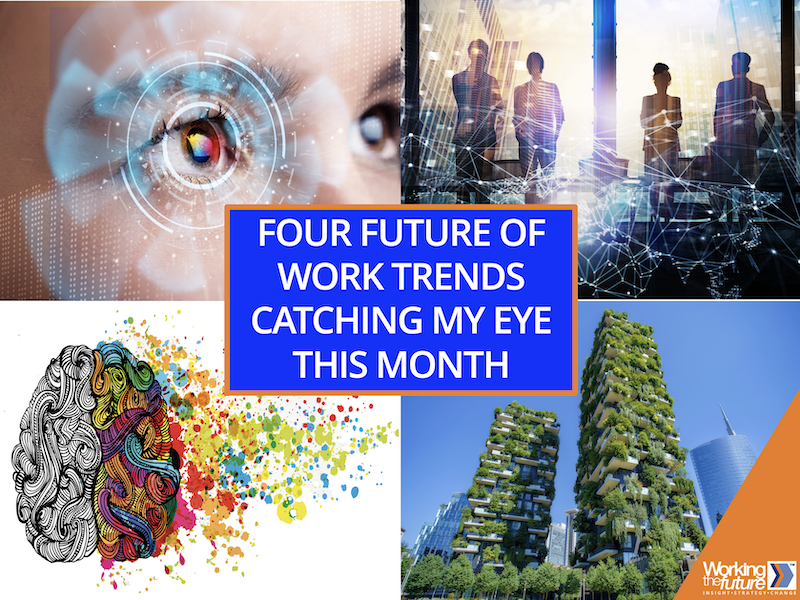
As the nature of work shifts and transforms, there’s a huge amount to digest. Clients regularly ask us to present curated future of work trends and expert analysis of the implications emanating from them. Here are four emerging shifts and perspectives on the myriad ways the future of work is evolving that caught Pat's eye this month…
1] Coming to a boardroom near you – AI CEO avatars
Tech CEOs are increasingly turning to AI avatars to handle their packed meeting schedules. With 72% of chief executives' time spent in meetings, leaders like Klarna's Sebastian Siemiatkowski and Zoom's Eric Yuan are experimenting with digital doubles to deliver earnings calls and company updates.
Zoom's Eric Yuan has used his AI avatar for earnings presentations and aims to deploy decision-making replicas within twelve months. Meanwhile, Steve Rafferty from Zoom has successfully used his AI double to deliver multilingual messages across global teams, describing it as "another string to the bow for business communication."
The technology goes beyond simple recordings. Companies like Sensay are training AI replicas on executives' communication patterns, emails and documents. CEO Dan Thompson reports his digital twin pre-drafts responses, saving hours daily whilst he handles other commitments.
However, significant risks emerge. AI hallucinations could spread misinformation under a CEO's identity, whilst deepfake scams targeting executives are already occurring. There are also serious data security concerns when AI systems access sensitive company information.
This trend signals a fundamental shift towards hybrid leadership models where AI handles routine interactions whilst humans focus on strategic vision and authentic connection. The challenge will be maintaining trust and authenticity as the line between human and artificial communication continues to blur across all organisational levels. After all – while AI can handle routine communications, core leadership elements remain irreplaceable and won’t be going anywhere soon.
2] The Future of Jobs 2030: transformation in motion
The World Economic Forum's most recent Future of Jobs Report paints a fascinating yet challenging picture of what lies ahead. Drawing insights from over 1,000 leading employers representing 14 million workers across 55 economies, the research reveals that we're heading towards the most dramatic workplace transformation in recent history.
By 2030, digital access will be the primary catalyst for change, reshaping 60% of businesses worldwide. This digital revolution, powered by AI and automation, creates an intriguing paradox – whilst generating exciting new opportunities, it simultaneously makes certain roles obsolete.
The stats are quite remarkable: 22% of current jobs will face structural changes, creating 170 million new positions but displacing 92 million others. The net result? A gain of 78 million jobs globally. Frontline workers like farmhands and delivery drivers will see the biggest absolute growth, whilst tech roles – think AI specialists and data experts – will experience the fastest percentage increases.
However, there's a significant challenge lurking beneath these promising numbers. Nearly 39% of existing skills will become outdated by 2030, with analytical thinking, resilience, and AI literacy becoming essential. Most concerning is that 63% of employers cite skill gaps as their biggest transformation hurdle.
Whilst 85% of companies plan to prioritise upskilling, the reality is stark: if the global workforce were 100 people, 59 would need retraining by 2030, yet 11 would likely miss out entirely.
The future of work hinges on our collective ability to invest in human capital development. Success won't just be measured by technological advancement, but by how effectively we bridge skill gaps and support workers through this extraordinary period of change. Those who adapt and reskill will thrive, whilst those left behind risk being marginalised in tomorrow's economy.
+ + + + + + + +
Are you thinking what we’re thinking - that keeping on top of how the future of work is evolving can be A LOT? Well, we live and breathe it, so you don't have to - and we're here to help.
Scroll down for more details on emerging future of work trend analysis, our trend workshops and seminars, free webinars and consultancy services in this area.
+ + + + + + + +
3] Why progressive organisations are ditching ‘soft’ for ‘vital skills’
Organisations today are grappling with what experts call a 'permacrisis' – a perfect storm of technological disruption, geopolitical tensions, and climate challenges that's creating unprecedented uncertainty across all sectors.
Traditional 'hard' skills, once considered the gold standard, are becoming increasingly transient as technology rapidly reshapes entire industries.
In response, forward-thinking companies are abandoning the term 'soft skills' altogether, rebranding them as 'vital' or 'power' skills instead. This isn't just semantic window-dressing – it reflects a fundamental shift in how businesses view capabilities like communication, empathy, and strategic thinking. These deeply human abilities are proving nearly impossible for AI to replicate, making them increasingly valuable in an automated world.
For decades, these skills were erroneously viewed as innate personality traits rather than learnable business capabilities. This misguided approach has cost companies dearly, as technically brilliant 'high performers' often struggled to collaborate, provide meaningful feedback or much less adapt under pressure.
The turning point came when organisations began connecting people skills directly to profit margins. Research reveals that managers who foster psychological safety see their teams deliver 67% more breakthrough innovations. Leaders skilled at navigating difficult conversations prevent costly dysfunction that can cripple productivity.
Looking ahead, the implications are profound. As AI increasingly handles technical tasks, our uniquely human abilities to think creatively, forge genuine connections and adapt to change will become the ultimate competitive differentiator. Organisations that systematically develop, measure and strategically leverage these vital skills will thrive, while those clinging to outdated models risk being left behind in an increasingly human-centric future of work.
4] Nature degradation could slash 5% off UK GDP by 2030
British experts are sounding the alarm for the future of the UK economy. Because in addition to post-Brexit malaise, geopolitical and domestic political uncertainties, rising tax burdens, trade tariff risks, persistent inflation and structural productivity challenges, there’s an additional threat on their radars.
If the private sector doesn't step up its environmental game, nature degradation is set to slash UK GDP by nearly 5% within the decade. But there's a silver lining – investing in nature can actually boost company profits whilst helping meet climate targets.
A Green Finance Institute and WWF report reveals that many businesses remain oblivious to their environmental impact or are dragging their feet on reform. The solution lies in "nature-positive transition pathways" (NPPs) – essentially green action plans where companies commit to environmental targets with government support.
Environment Secretary Steve Reed emphasises that private investment in nature is crucial for economic growth, with a new national environmental plan due this autumn.
The evidence is certainly compelling. Construction firm Wates Group is boosting wildlife on sites by 20%, whilst examining supply chains for greener alternatives. In agriculture, soil degradation alone costs £1.4bn annually, but innovative companies like Velcourt are using satellite technology to improve yields. First Milk's cooperative of 700 regenerative dairy farmers earned members an extra £5,200 each in 2023 – roughly 7% of average farm income – whilst cutting water and energy consumption.
This shift towards more nature-positive business practices could signal a fundamental transformation in how we work. Companies will increasingly need environmental specialists, sustainability consultants and green technology experts. Traditional roles will evolve to incorporate environmental considerations, whilst entirely new related careers will emerge.
Whichever way you look at it, an authentic, dedicated and focused organisational commitment to reduced carbon emissions is now the only way to survive the turbulent markets of the 2020s. Those that adapt quickest and revisit from first principles how economic value is perceived, created and delivered are set to enjoy longer-term business sustainability.
+ + + + + + + +
Business transformation isn’t the latest software or project tool. Lasting organisational change happens conversation by conversation...
So, if you’d like to explore anything we've touched on in this blog or discuss any other aspects of the future of work, please do get in touch.
You might also want to: